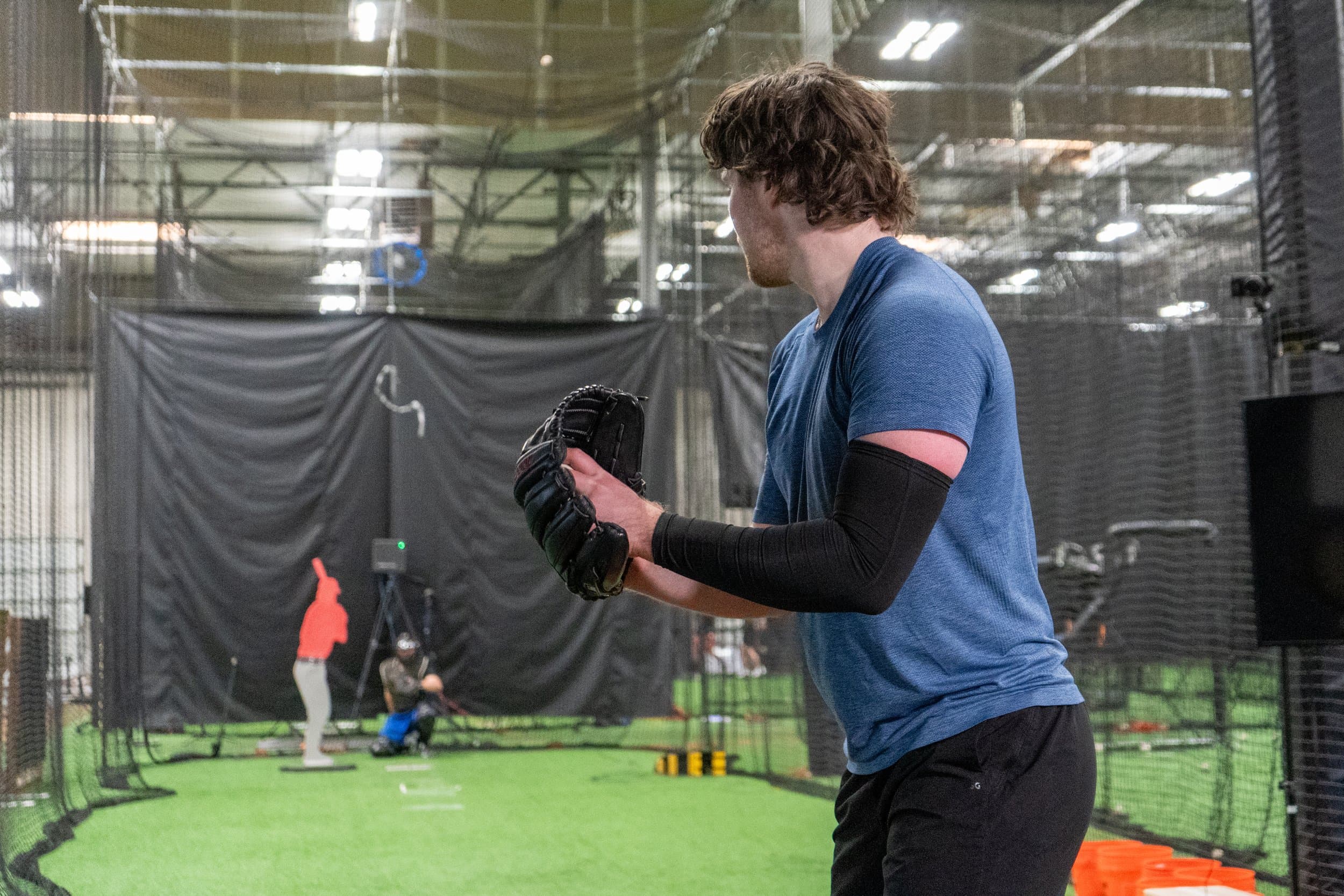
LITTLE LEAGUE INJURIES
Specialty rehab for the injuries young throwers actually get, Little Leaguer's elbow and shoulder, capitellum OCD, and the growth-plate issues that only happen to arms still in development.
Book a Free ConsultKEY FACTS
- Why do youth throwing injuries differ from adult injuries?
- In a young thrower, an open growth plate can be more vulnerable than the UCL. A stress pattern that affects an adult's UCL may instead irritate the medial epicondyle growth plate or contribute to an avulsion injury in an adolescent.
- What is Little Leaguer's elbow?
- Medial epicondyle apophysitis, growth plate irritation on the inside of the elbow from repetitive throwing stress. It is the most common elbow injury in youth throwers.
- At what age do growth plates close?
- Elbow growth plates typically close between ages 14-17; shoulder growth plates between 18-22. Until they close, the growth plate is the structure most at risk from throwing stress.
- How long before a young thrower can throw again?
- Mild medial epicondyle apophysitis may take roughly 4-6 weeks. Capitellum OCD and surgically treated avulsion injuries often take several months. The actual timeline depends on severity, imaging, physician guidance, and objective progression criteria.
- Should young pitchers play baseball year-round?
- No. Single-sport specialization before age 15 increases injury risk. Youth throwers need at least 2-3 months completely off from overhead throwing each year.
- When should a young thrower stop and get evaluated?
- Elbow pain lasting more than 24 hours after throwing, pain that worsens as the game goes on, swelling, loss of full extension, shoulder pain at night, or a sudden drop in velocity or accuracy.
WHY YOUTH ARMS BREAK DIFFERENTLY
In an adult thrower, the weakest link in the elbow is the UCL. In a young thrower, it is the growth plate. So when a 25-year-old pitcher tears a UCL, a 14-year-old with the same stress pattern gets medial epicondyle apophysitis, or worse, an avulsion fracture. Different injury, same cause: too much throwing without enough recovery.
These injuries are not small versions of adult injuries. They are their own category. They need a provider who knows the difference between soreness and apophysitis, between a dead arm and the early warning signs of OCD, and between fatigue that is normal and pain that is telling you to stop.
Travel ball culture has created year-round throwing schedules for 12-year-olds. Fall ball into winter showcases into spring season into summer tournaments. No off-season. No periodization. No workload tracking. The result: a generation of young arms breaking down at exactly the age their growth plates are most vulnerable.
THE INJURIES WE TREAT
Growth-plate and youth-specific throwing injuries. Every one of these requires a different approach than the adult version.
LITTLE LEAGUER'S ELBOW
Clinical name: Medial epicondyle apophysitis
The growth plate on the inside of the elbow gets irritated from repetitive throwing stress. Pain on the inside of the elbow during or after throwing is the hallmark sign. This is the most common elbow injury in youth throwers.
OCD OF THE CAPITELLUM
Clinical name: Osteochondritis dissecans
Compression forces on the outside of the elbow damage the cartilage and bone. Often sneaky, vague lateral elbow pain and loss of extension. Left untreated, loose bodies in the joint can require surgery.
LITTLE LEAGUER'S SHOULDER
Clinical name: Proximal humeral epiphysiolysis
The growth plate at the top of the humerus widens from rotational stress during throwing. Shoulder pain with acceleration is the typical complaint. Rest and workload management are essential; ignored, it can cause growth disturbances.
MEDIAL EPICONDYLE AVULSION
Clinical name: Apophyseal avulsion fracture
The severe end of Little Leaguer's elbow. The apophysis (growth plate with attached tendon) pulls off the bone: a sudden pop, immediate pain, inability to throw. Often requires surgical fixation if displaced.
OLECRANON APOPHYSITIS
Clinical name: Posterior elbow apophysitis
Growth plate irritation at the back of the elbow from repetitive triceps loading and valgus extension overload. Often missed because the pain is posterior, not medial. Common in adolescent pitchers with high workload.
PARS STRESS FRACTURE
Clinical name: Spondylolysis
Stress fracture of the pars interarticularis in the lumbar spine. The cost of repetitive extension and rotation from pitching and hitting. One-sided low back pain that worsens with extension. Left unmanaged, can progress to vertebral slippage (spondylolisthesis).
THE TRAVEL BALL PROBLEM
Travel ball is not the villain. Bad workload management is. The problem is not that your kid plays on a competitive team. It is that nobody is tracking total arm stress across practices, bullpens, games, showcases, and lessons.
A typical travel ball kid might throw 40 pitches in a game, then catch an inning, then play shortstop, then hit the bullpen before the next game. By Sunday night, that arm has seen 150+ high-effort throws in a weekend. Multiply that by 40 weekends a year with no off-season and you have a growth plate injury waiting to happen.
When we return a young thrower to the mound after an injury, we are not just rehabbing the tissue. We are rebuilding the workload plan around it, so the injury that brought you to us does not happen again.
WHEN TO PULL THEM OFF THE MOUND
Print this. Put it in your bag. If your child checks any of these boxes, they need to stop throwing and get evaluated.
- Elbow pain that lasts more than 24 hours after throwing
- Pain on the inside of the elbow during or after throwing
- Decreased velocity or accuracy that came on suddenly
- Pain that gets worse as the game goes on, not better
- Swelling or visible puffiness around the elbow
- Loss of full elbow extension (cannot straighten the arm)
- Shoulder pain that wakes them up at night
- Complaints of "dead arm" or arm feeling heavy
None of these mean your child's career is over. All of them mean the arm needs to be evaluated before throwing again. Early intervention is the difference between two weeks off and six months of rehab.
HOW WE TREAT THEM
ACCURATE DIAGNOSIS
Growth-plate and bony injuries mimic soft-tissue problems. Getting that wrong costs weeks. We rule in or out apophysitis, avulsion, OCD, and pars stress fractures with a thorough clinical exam and imaging when it changes the plan.
STRUCTURED LOAD MANAGEMENT
Not “just rest for six weeks.” We define what the arm is allowed to do and when: throwing, lifting, other sports. So the tissue heals without the athlete losing all their fitness.
RETURN-TO-THROW PROGRESSION
The same velocity- and effort-gated return-to-throw program we use with adult pitchers, scaled for young arms. Advancement is based on objective criteria, not a calendar or how it feels that day.
STRENGTH WHILE HEALING
Rest the growth plate. Not the kid. Age-appropriate strength work on legs, trunk, and non-throwing movement patterns keeps your athlete engaged, fit, and ready for a faster return when the tissue is ready.
THE DRIVELINE ADVANTAGE
Our clinics operate inside Driveline Baseball facilities in Kent, WA and Tampa, FL. That means your kid rehabs with the same workload monitoring, arm health screening, and return-to-throw tools used by professional organizations, not in a sterile clinic, but in a baseball facility surrounded by the tools they will use when they are healthy again.
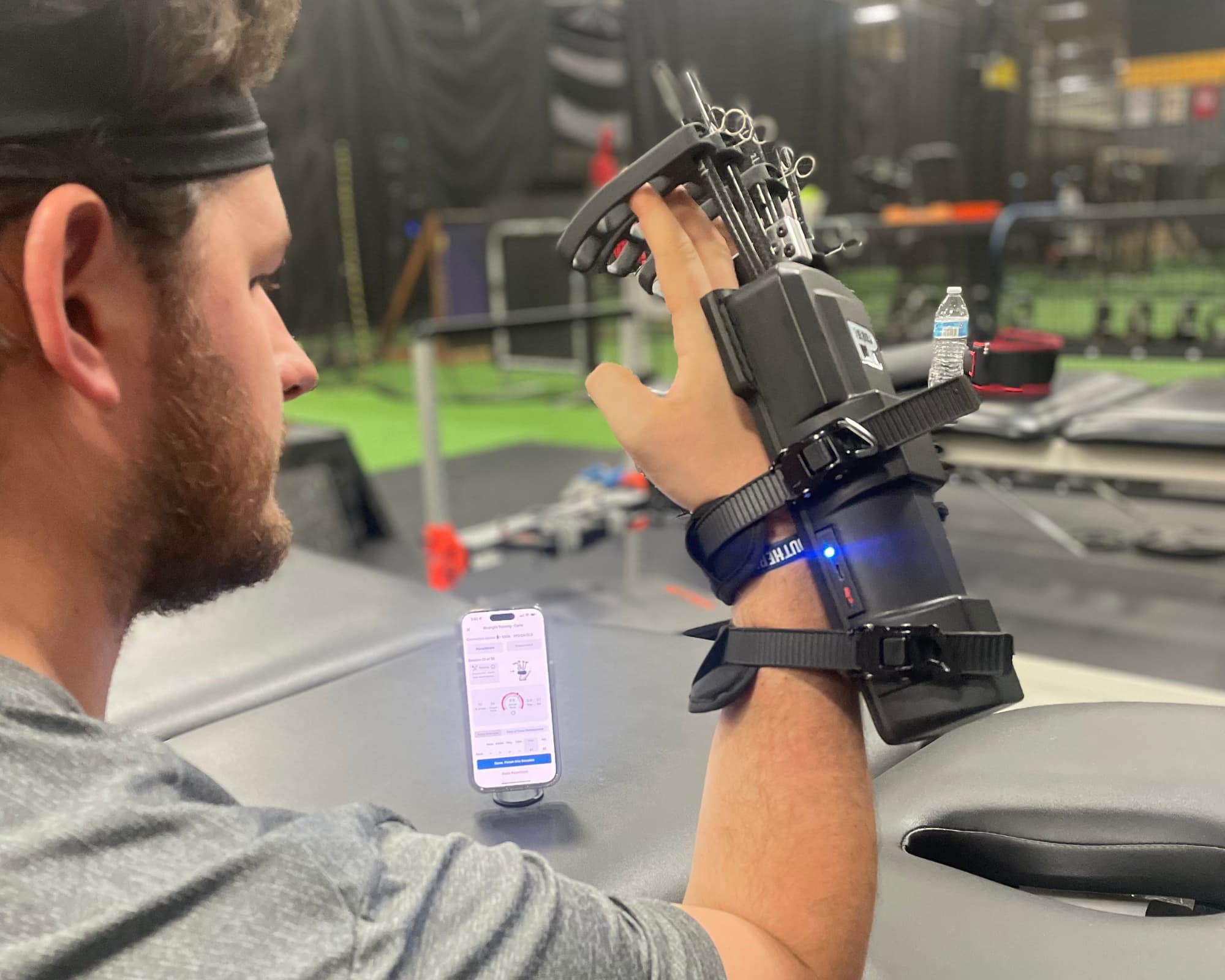
Mounds, cages, PULSE, ArmCare, radar, and a full weight room, available from day one of the return progression.
QUESTIONS FROM PARENTS
Growth Plates & Development
Treatment & Return to Play
Training & Workload
GET THEM BACK ON THE FIELD
If your kid is hurting, waiting makes it worse. Let's get them evaluated, diagnose what is actually going on, and build a return-to-throw plan that fits a growing arm.
Book a Free Consult