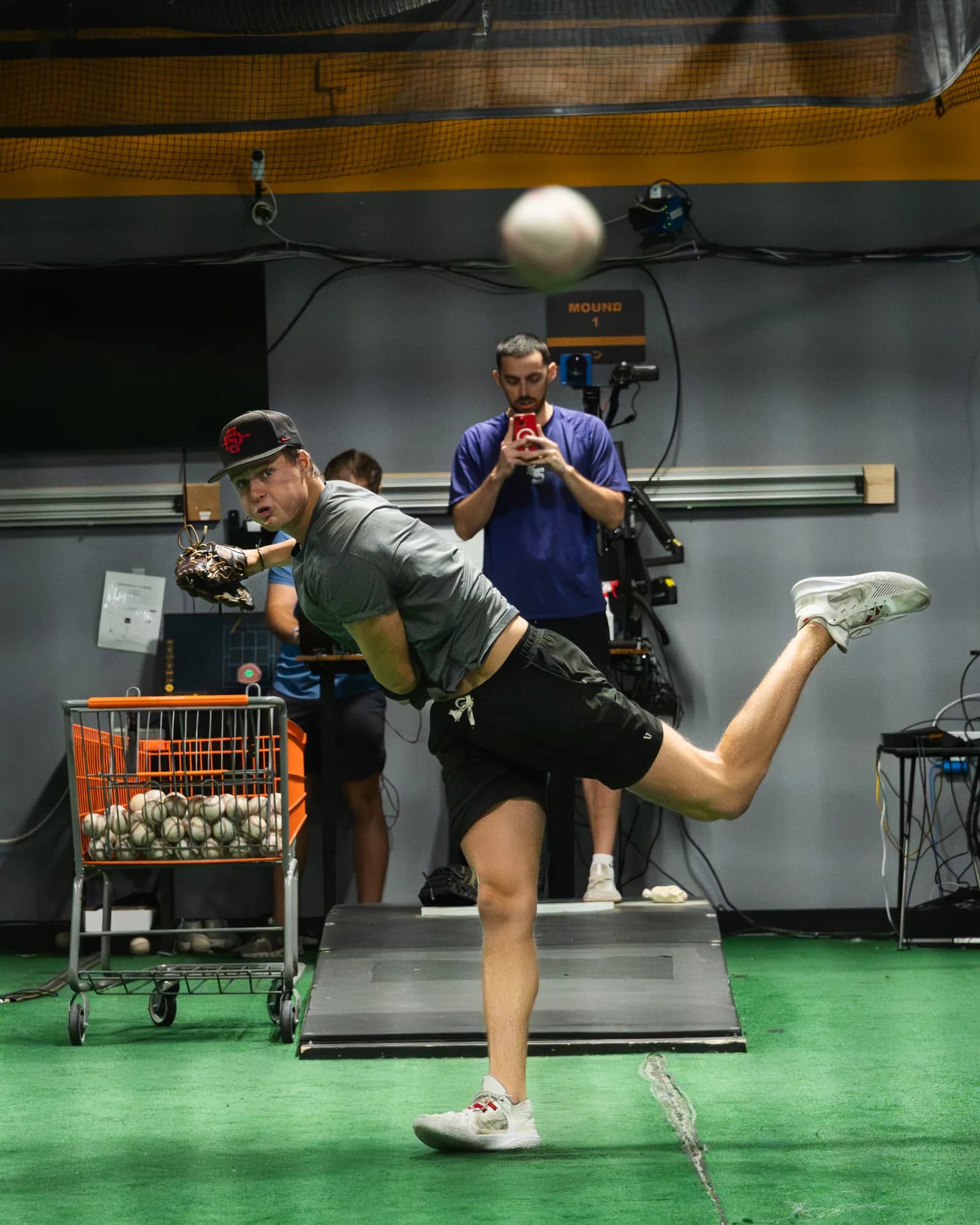
Return to throwing. Build back to competition.
Getting cleared to play catch is the midpoint. We rebuild strength, throwing intensity, workload, mound exposure, pitch mix, recovery, and the ability to compete when adrenaline returns. Each phase advances from how your arm responds.
One Plan
Rehab, lifting, and throwing
Every Throw
Velocity and workload tracked
Full Effort
Mound, pitch mix, and recovery
Two Locations
Kent, WA and Tampa, FL
Criteria before calendars
Symptoms matter, but they are only one input. Strength, range of motion, throwing velocity, workload, and recovery help determine when the next step is appropriate.
One integrated plan
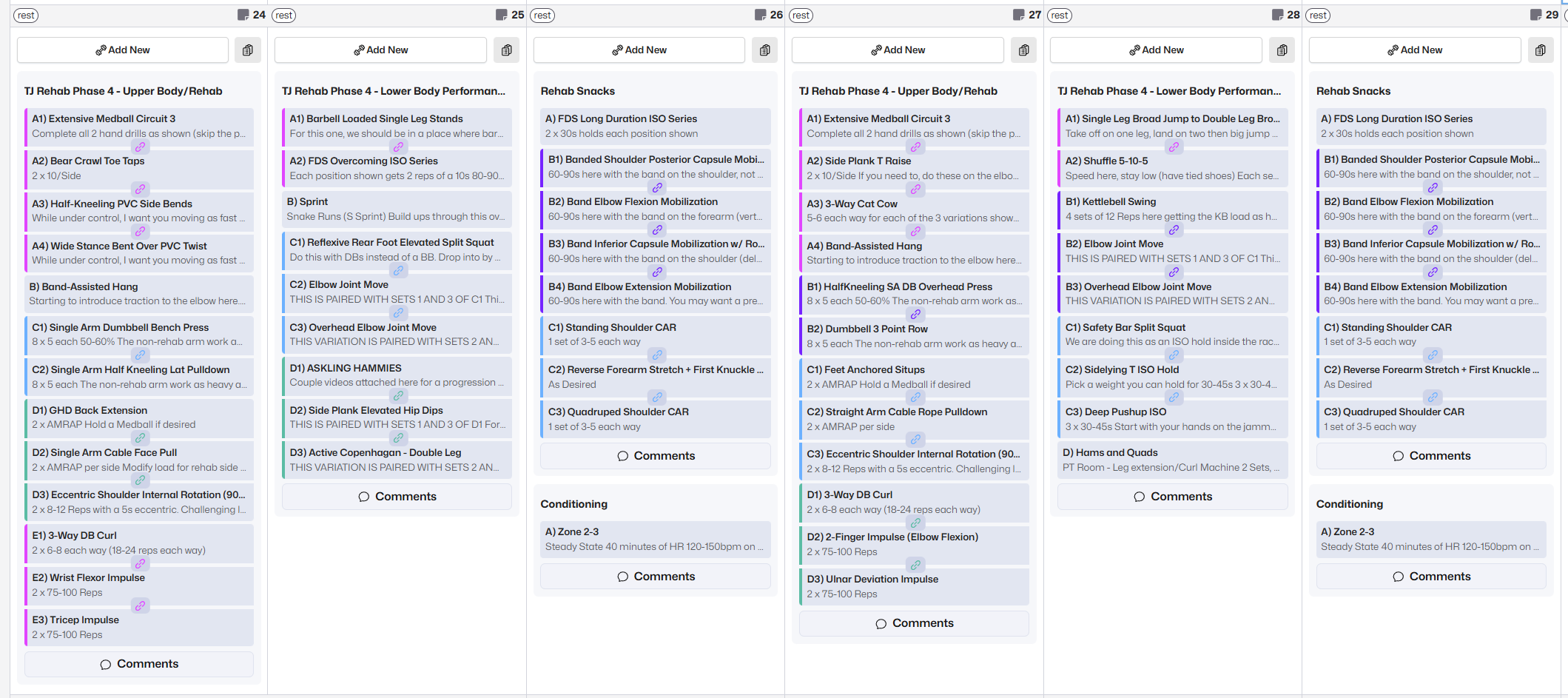
Your rehab, strength work, and throwing progression run together. The plan reflects your injury, position, training age, season, and the role you need to handle when you return.
Full effort is the test
The process continues through full-effort bullpens, pitch mix, role-specific volume, and between-session recovery. The next phase begins once the arm can handle those demands repeatedly.
The Six-Phase Progression
Tissue Healing & Pain Resolution
Variable, days to weeks
Goal: Protect healing tissue. Settle symptoms. Maintain everything else.
This is the only phase driven by biology, not performance. The tissue, whether it is a UCL repair, labral repair, rotator cuff, or a non-surgical injury, needs time to heal. There is no shortcut here, and attempting one is how reinjuries happen.
But tissue healing does not mean doing nothing. You train everything that is not the injured structure. Legs, core, conditioning, mobility, contralateral arm. The goal is to come out of this phase in better shape than you went in, not detrained and stiff.
Advancement Criteria
- ■Pain-free daily activities
- ■Full passive range of motion (or surgeon-specified limits)
- ■No swelling or inflammation at the injury site
- ■Cleared by PT or surgeon for next phase
Range of Motion & Tissue Loading
Typically 2-4 weeks
Goal: Restore full shoulder and elbow motion. Begin progressive tissue loading.
Now the tissue can handle stress, but not throwing stress. This phase rebuilds the foundation: full internal and external rotation, elbow flexion and extension, scapular control under load, and rotator cuff endurance.
We also start addressing the kinetic chain. Hip mobility, thoracic extension, core stability. The arm does not throw alone, and restoring full-body movement patterns now may reduce compensations later.
Advancement Criteria
- ■Symmetrical internal and external rotation (within 5 degrees of the other arm)
- ■Full, pain-free elbow extension and flexion
- ■Rotator cuff strength at 80%+ of the uninvolved side
- ■Pain-free resistance through the full throwing motion pattern (no ball)
Strengthening & Plyometric Loading
Typically 2-6 weeks
Goal: Build tissue tolerance for explosive force. Prepare the arm for the demands of throwing.
This is where most return-to-throw programs fall short: they jump straight from range of motion work to throwing, skipping the training phase that prepares the tissue for explosive force.
Plyometric loading bridges the gap. Wrist weight throws, reverse throws, pivot pickoffs, and weighted ball work (at low intensity) teach the tissue to handle rapid stretch-shortening cycles. We also increase upper body and posterior chain strength significantly in this phase.
Advancement Criteria
- ■Rotator cuff strength at 90%+ of uninvolved side
- ■Pain-free plyometric ball catches and throws
- ■Grip strength at 90%+ limb symmetry index (FlexPro Grip tested)
- ■Forearm pronation/supination strength benchmarks met
- ■Lower body and trunk strength benchmarks met (squat, deadlift, rotational power)
Velocity-Zone Throwing Progression
Typically 4-8 weeks
Goal: Reintroduce the throwing motion with velocity as the progression variable.
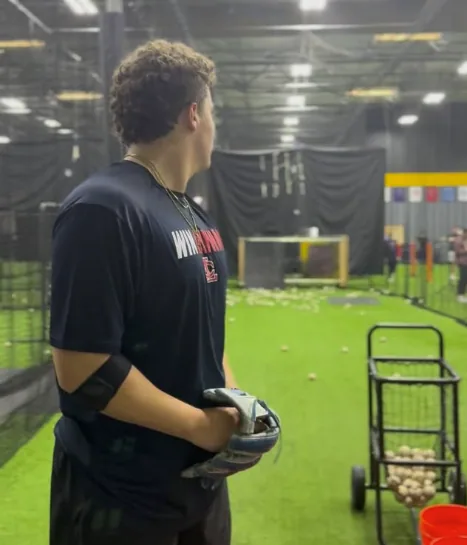
The first time the ball leaves your hand again. Catch play, constraint drills, throw count, velocity, intent, and recovery all help describe the workload. We use radar to anchor intensity instead of relying on feel alone.
PULSE workload data and planned velocity zones organize the progression. Symptoms, recovery, grip and shoulder strength, and forearm capacity help us decide when to advance. In-person coaching or remote video review lets us address a mechanical issue when it is contributing to a specific irritation pattern.
Advancement Criteria
- ■Pain-free throwing at current velocity tier before advancing
- ■Ball velocity tracked via radar, progression tied to % of pre-injury baseline
- ■Throw count, intensity, and recovery remain within the planned weekly progression
- ■Grip strength at 90%+ limb symmetry index
- ■Shoulder IR/ER strength benchmarks met at 90 degrees abduction
Mound Work & Bullpen Progression
Typically 3-6 weeks
Goal: Transition to the mound. Reintroduce slope, pitch mix, and competitive intensity.
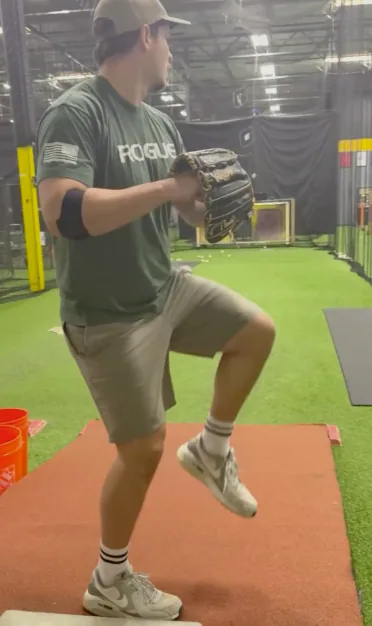
The mound changes everything. The downhill slope alters the arm angle, accelerates the body, and increases forces on the elbow and shoulder. This is not just flat ground throwing from a higher spot. The biomechanics are different.
We start with fastballs only, low count, moderate effort. Then add volume. Then add secondary pitches. Then increase intensity. At our Kent facility, this entire phase is monitored with radar guns, PULSE workload tracking, and video analysis, giving us objective data on velocity, arm speed, and throwing stress at every step.
Advancement Criteria
- ■Pain-free bullpen sessions at game-effort intensity
- ■Full pitch mix thrown without symptoms
- ■Velocity within 90% of pre-injury baseline (tracked via radar every session)
- ■Workload and recovery remain stable throughout the ramp-up
- ■Grip strength and forearm strength benchmarks maintained above gating thresholds
- ■Pitch count tolerance matching role requirements
Full-Effort Bullpens & Performance Handoff
Typically 2-4 weeks
Goal: Prove full-effort bullpen tolerance and prepare the next coach to take over.
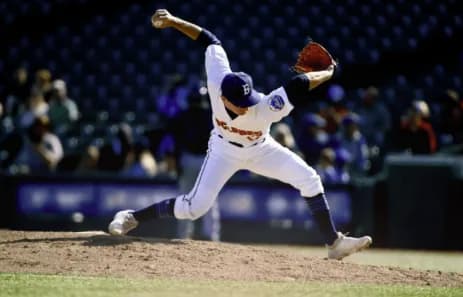
Full-effort bullpens are the final throwing checkpoint we manage. The athlete must handle the pitch count, intensity, pitch mix, recovery, and weekly workload required for the role without losing strength or developing symptoms.
The next phase depends on the athlete. Some return to their team or private coach. Others move into Driveline for motion capture, live at-bats, pitch design, or pitching development. We provide the workload history, velocity data, and strength benchmarks that tell the next coach where to begin.
Advancement Criteria
- ■Symptom-free through full-effort bullpen sessions
- ■Velocity at or near the agreed return target
- ■Recovery between outings consistent with pre-injury patterns
- ■Pitch count and weekly workload match the athlete's next training phase
- ■Strength and forearm benchmarks remain stable as mound intensity rises
- ■A written handoff is ready for the team, private coach, or Driveline staff
Want to Talk Through Your Situation?
Free phone call. No insurance, no commitment. Cash-based practice with superbills available for out-of-network reimbursement.
Pain-free catch is not the finish
Pain-free catch is an important checkpoint. It does not recreate the slope of the mound, a full pitch mix, game-speed intent, fatigue, or the pressure of throwing to a hitter.
Jumping from comfortable catch to a full-intent bullpen is a much larger change than it feels. Strength, velocity, workload, recovery, and mound work build the missing steps before unrestricted baseball activity.
Clear Roles
WE OWN THE RETURN TO THROW.
Athletic Potential manages the injured arm, strength, throwing workload, mound progression, and full-effort bullpens. The athlete chooses what comes next: Driveline Baseball, a team, a private coach, or another training setting.
PITCHERS
We build the arm through full-effort bullpen work. Athletes who want motion capture, live at-bats, pitch design, velocity development, or command training can then move into Driveline's pitching program.
TWO-WAY PLAYERS
Hitting often returns before pitching. A two-way player can begin hitting and strength training with Driveline while Athletic Potential continues to manage the throwing progression. Both staffs coordinate workload as the arm catches up.
Why we track velocity
Distance and perceived effort can help organize a throwing session, but neither tells the whole story. Two throws from the same distance can have very different intent and velocity. Radar gives the athlete and clinician a shared reference point for intensity.
We pair velocity with throw count, symptoms, recovery, strength, and the planned role. That makes progression decisions more specific than a guess at “75% effort.” The same records become the starting point for the team, private coach, or Driveline staff after the handoff.
We also use video to screen for specific mechanical faults, early trunk rotation, excessive elbow drop, that cause localized tissue irritation. This is clinically meaningful, but it is a different problem than global valgus torque. We do not chase arm action aesthetics.
What we measure
What we measure before we advance you.
Data only matters when it changes a decision. We use the tools that fit the athlete, the phase, and the question we need to answer.
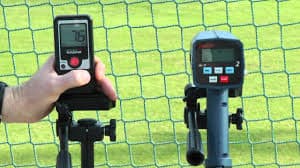
Stalker & Pocket Radar
Velocity zones across catch play, constraint drills, and mound work.
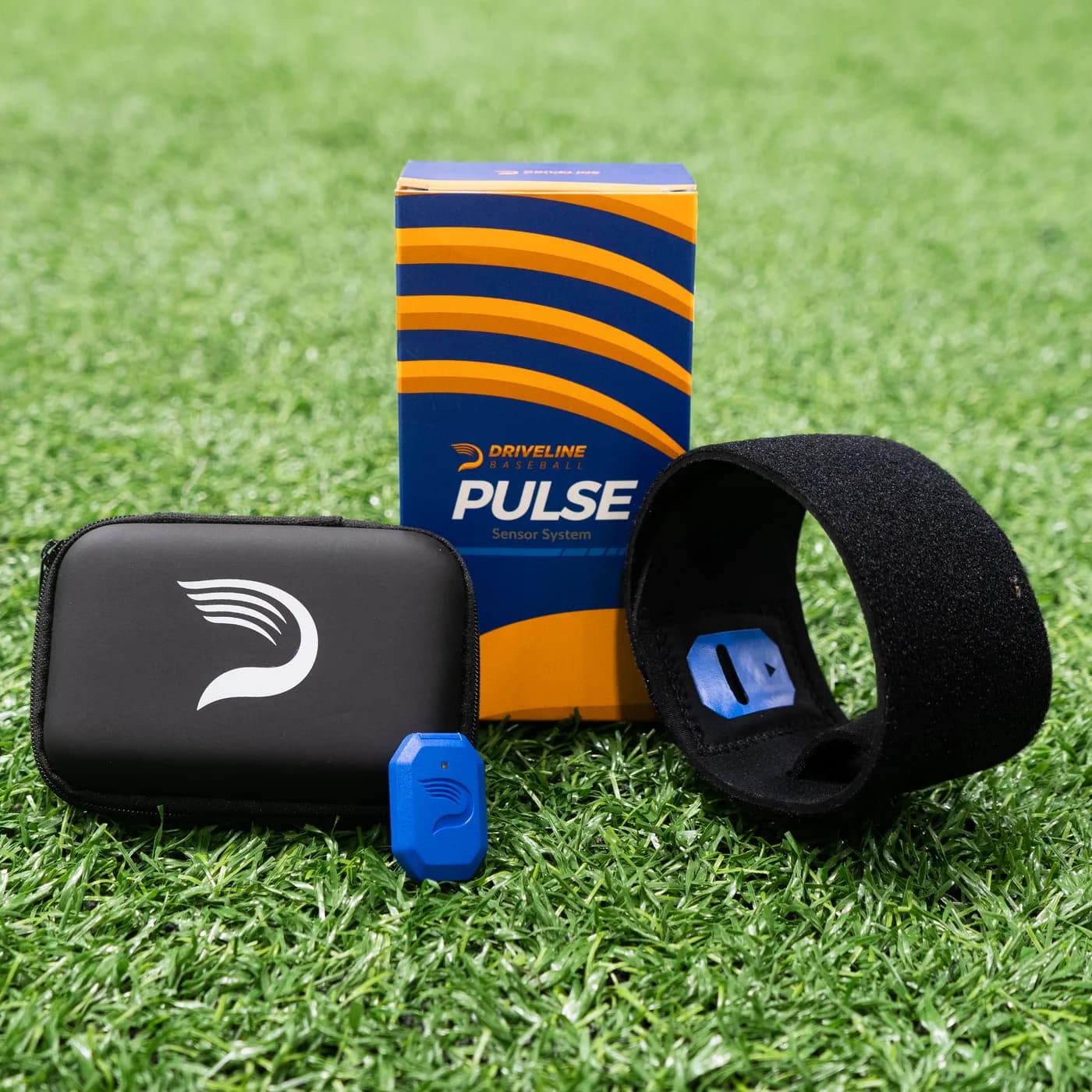
Driveline PULSE
Arm speed and throw counts. Daily and weekly load.
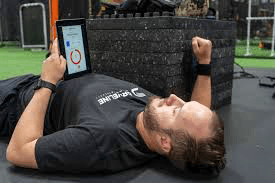
ArmCare
Isometric strength testing, IR, ER, scap. Tracks symmetry.
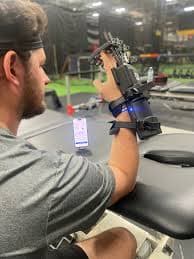
FlexPro Grip
Forearm capacity testing. Often the silent driver of elbow setbacks.
Workload tracking
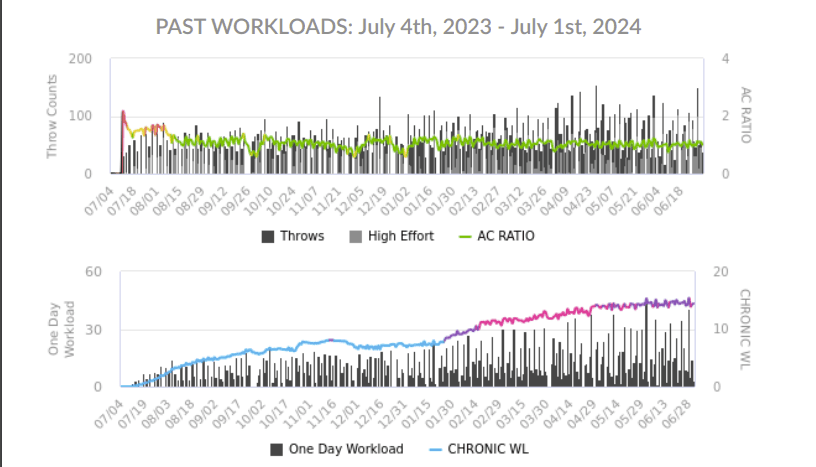
A real return-to-throw, charted day by day.
Daily throw counts, acute:chronic ratio, and the chronic load curve over a full year. Every spike flagged.
Velocity progression
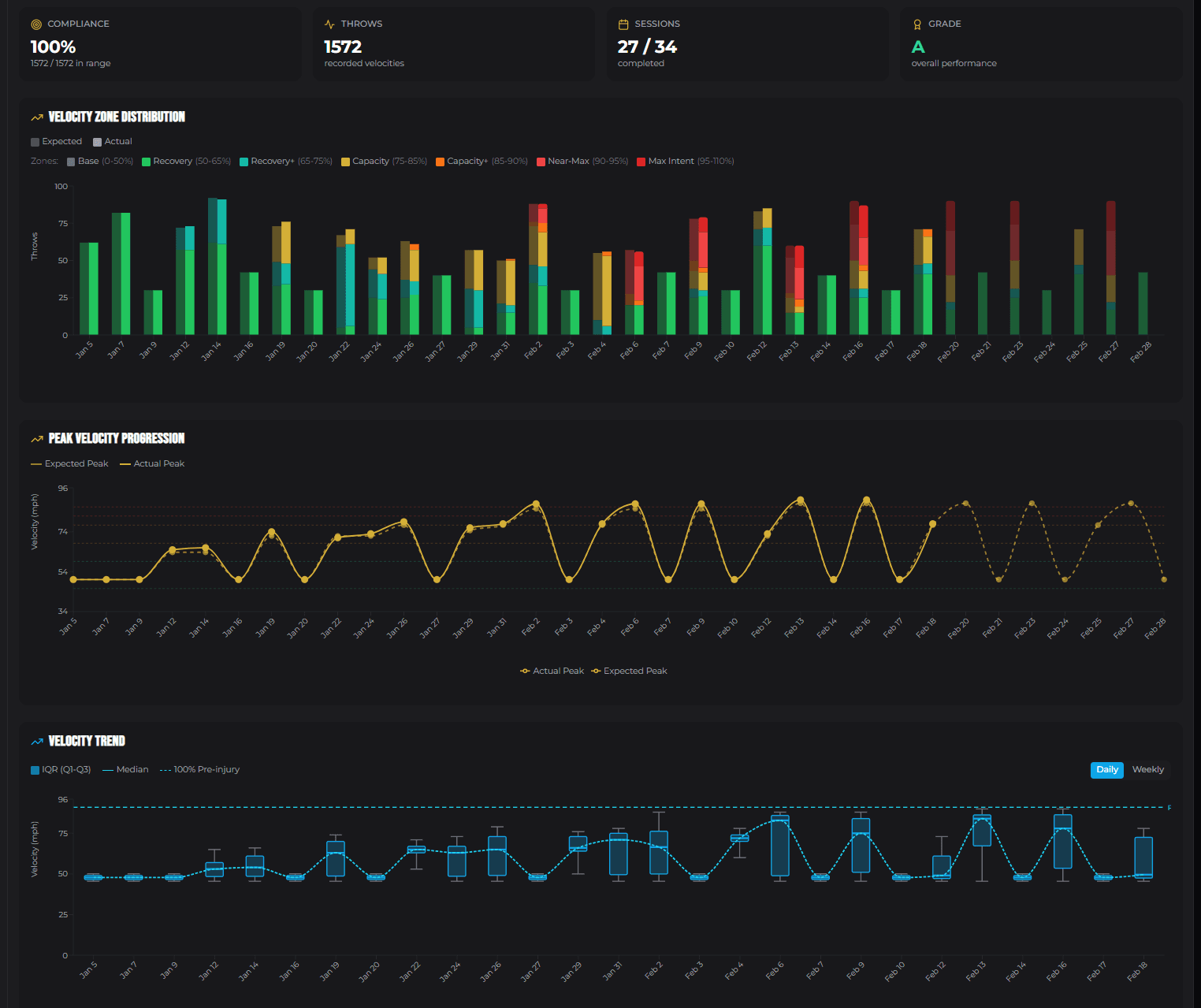
Every throw, by intensity zone.
Throws bucketed by velocity zone. Peak progression vs. expected. Pre-injury baseline as the target line.
Ready to start your return?
You may be two weeks post-surgery, beginning a conservative rehab plan, or stuck in a throwing progression that is not moving. We will start with what your arm can do now and map the work ahead.
Fill out the form and we will follow up to discuss the next step. We are a cash-based practice, and superbills may be available for eligible PT visits.
Book a Free Consult